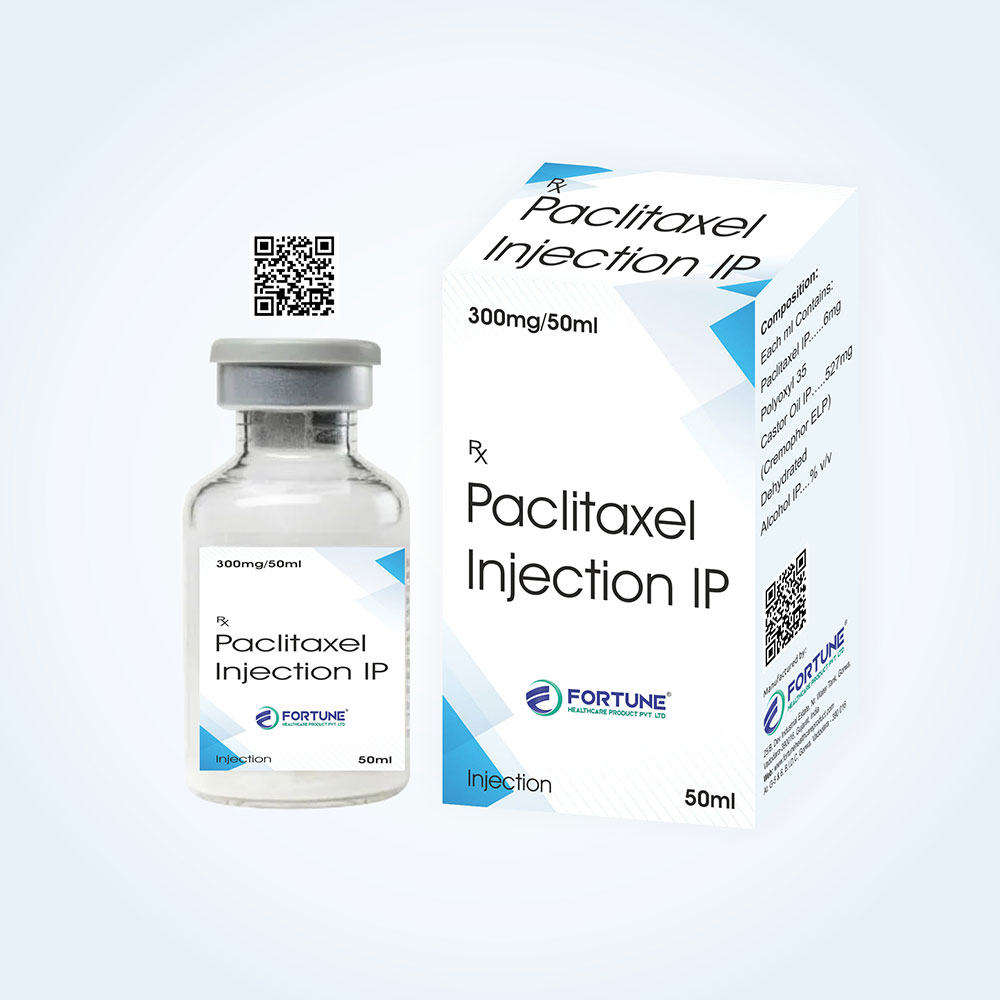
Paclitaxel Injection IP 300mg Overview
Paclitaxel belongs to the taxane class of chemotherapy medicines. It binds to microtubules inside cancer cells and keeps them from breaking down. As a result, the cells cannot divide properly, and they die. Doctors use paclitaxel injection 300 mg in several cancers. First, they use paclitaxel for ovarian cancer, often together with cisplatin. Second, they use paclitaxel for breast cancer, both after surgery in node-positive disease and in metastatic disease. Third, they use it for non-small cell lung cancer together with cisplatin. Finally, they use it as a second-line treatment for AIDS-related Kaposi sarcoma. Because paclitaxel is a hazardous drug, trained staff must handle it with care. Therefore, only a physician experienced in cancer chemotherapy should supervise its use.Product Specifications
| Attribute | Details |
| Composition | Paclitaxel |
| Strength | 300mg per 50 ml (6 mg/ml) |
| Dosage Form | Injection concentrate (dilute before use) |
| Packaging | Box |
| Therapeutic Category | Anti-cancer / Taxane |
| Route of Administration | Intravenous infusion, by healthcare professionals only |
| Storage | Store at 20°C to 25°C, protected from light, unless the pack label says otherwise |
Precautions & Warnings
- Specialist use only: Trained healthcare professionals alone should prepare and give this injection, and they must follow cytotoxic handling rules.
- Severe allergic reactions: Anaphylaxis and severe hypersensitivity can occur, partly because the vehicle contains polyoxyl castor oil. Therefore, give premedication, and keep emergency treatment available. Do not use it in patients who are allergic to paclitaxel or castor oil.
- Bone marrow suppression: Paclitaxel can lower white cells, platelets, and red cells. For this reason, check blood counts regularly, and watch for infection and bleeding.
- Peripheral neuropathy: Numbness, tingling, or burning in the hands and feet can occur. Doctors may reduce the dose if symptoms are severe.
- Liver impairment: Patients with liver problems face a higher risk of toxicity. Therefore, doctors should reduce the dose and monitor closely.
- Heart effects: Slow heart rate, low blood pressure, and conduction changes can occur during infusion. Also monitor the heart in patients with existing heart disease.
- Injection site reactions: Leakage outside the vein can cause pain and swelling. Therefore, use a secure intravenous line and watch the site.
- Alcohol content: The vehicle contains dehydrated alcohol. Consider this in patients who drive, take sedatives, or have liver disease.
- Pregnancy and breastfeeding: Paclitaxel can harm an unborn baby. Therefore, avoid it in pregnancy and breastfeeding, and use effective contraception during treatment.
- Drug interactions: Medicines that affect the liver enzymes CYP2C8 and CYP3A4 can change paclitaxel levels. In addition, give it before cisplatin when you combine the two, because the reverse order increases myelosuppression. Likewise, avoid live vaccines during treatment, and tell the doctor about all current medications.
Overdose Information
No known antidote exists for a paclitaxel overdose. The main expected complications are bone marrow suppression, peripheral neuropathy, and mucositis. Therefore, the treating team should give supportive care and closely monitor blood counts.Storage Instructions
- Store the vials at 20°C to 25°C unless the pack label says otherwise.
- Protect them from light, and keep them in the original carton.
- Do not refrigerate or freeze the vials unless the label directs it.
- Keep them out of reach and sight of children.
- Do not use them after the expiry date on the pack.
- Dispose of unused product and used vials as cytotoxic waste. Follow local regulations instead of using household waste or wastewater.
FAQs
What is Paclitaxel Injection IP 300mg used for?
Paclitaxel is a taxane chemotherapy medicine. Doctors use it for ovarian cancer, breast cancer, and non-small cell lung cancer, and as a second-line treatment for AIDS-related Kaposi sarcoma. A trained healthcare professional gives it as an intravenous infusion in a hospital or oncology center.
How is paclitaxel injection 300 mg given?
A trained professional dilutes the concentrate in saline or dextrose solution and gives it as an intravenous infusion over 3 or 24 hours, depending on the regimen. Patients first receive premedication to prevent allergic reactions. Because the dose depends on body surface area and the cancer type, follow the treating oncologist’s schedule.
What are the side effects of paclitaxel?
Hair loss, fatigue, joint and muscle pain, numbness or tingling in the hands and feet, nausea, and low blood counts are common side effects. However, tell your doctor immediately about fever, bleeding, breathing difficulty, facial swelling, or chest pain, because these can signal serious problems.
Why do patients need premedication before paclitaxel?
Paclitaxel can cause severe allergic reactions, partly because of its castor oil vehicle. Therefore, doctors give a corticosteroid, an antihistamine, and an H2 blocker before each dose. This premedication greatly lowers the risk of serious reactions, but staff must still watch the patient closely during the infusion.
Who should not receive paclitaxel?
Doctors do not give paclitaxel to anyone allergic to it or to castor oil. They also avoid it when the neutrophil count is too low, and in pregnancy and breastfeeding. Likewise, they use caution in patients with liver disease, heart disease, or existing nerve damage.
Is paclitaxel injection available for bulk or hospital orders?
Yes. As a paclitaxel injection supplier in India, Fortune Healthcare Product Pvt Ltd supplies Paclitaxel Injection IP 300mg to hospitals, oncology centers, distributors, and institutional buyers. We also offer tenders, contract manufacturing, and private-label packaging