
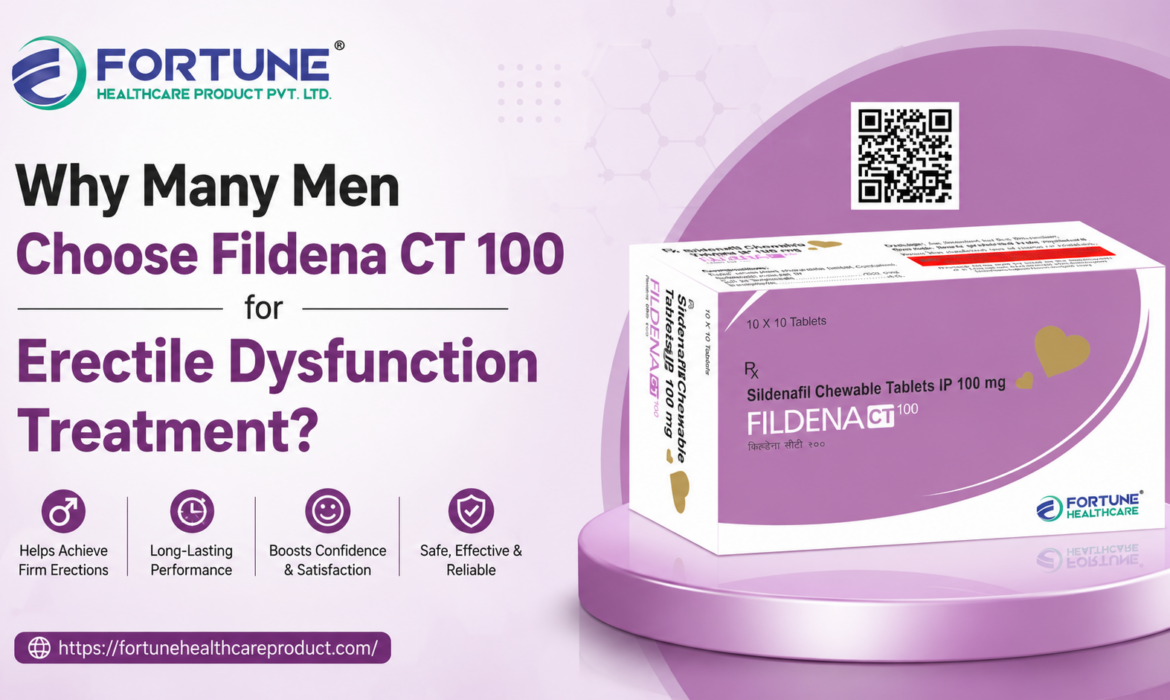
Why Many Men Choose Fildena CT 100 for Erectile Dysfunction Treatment?
Fildena CT 100 is one of the medications men bring up most often when they finally decide to talk to a doctor about erectile dysfunction. And that’s usually the hardest part — most men wait months, sometimes years, before saying anything at all. ED isn’t rare or unusual. It becomes more common with age and tends to show up more often in men dealing with diabetes, high blood pressure, or cardiovascular issues. This piece looks at why this particular medication comes up so frequently, what it actually does, and just as importantly, what it doesn’t do.
How Does Sildenafil-Based Treatment Actually Work?
This chewable tablet is built around sildenafil citrate, the same compound behind the original branded ED medication most people have heard of. Sildenafil belongs to a group of medicines called PDE5 inhibitors. During sexual stimulation, it supports the natural processes that relax blood vessels and improve blood flow to the penis, helping a man achieve and maintain an erection.
That last part matters. It doesn’t switch on desire by itself. No PDE5 inhibitor does. You still need actual sexual stimulation for anything to happen. Think of it less like an “on” switch and more like clearing a pipe that was already meant to carry water through.
Sildenafil citrate is listed under Schedule H of the Drugs and Cosmetics Rules, 1945, meaning it should be sold by retail only against a prescription from a registered medical practitioner.
Why Are Chewable ED Tablets Becoming More Popular?
A fair number of men choose the chewable version simply because it’s less awkward. No glass of water, no visible pill bottle, nothing to explain.
There’s a practical side too. Some older men, or those with swallowing difficulties, genuinely find standard tablets uncomfortable, and chewables sidestep that.
It’s worth being clear, though: the chewable format changes how the tablet is taken, not how the drug itself behaves once it’s absorbed.
How Should Men Use Sildenafil Responsibly?
Taking sildenafil correctly matters as much as choosing the medicine itself. It is usually taken before planned sexual activity, but the exact timing and dose should follow a doctor’s instructions. A heavy or high-fat meal may delay how quickly the medicine begins working, so results are not always immediate. Men should never take an extra tablet simply because the first dose appears slow. Sildenafil should generally not be used more than once within 24 hours. Before treating it as a casual performance enhancer, it is just as important to be aware of possible interactions with current medicines and do not treat it without first consulting your doctor.
What Does Clinical Data Say About Sildenafil’s Effectiveness and Safety?
Sildenafil was approved by the US Food and Drug Administration for erectile dysfunction in 1998 and has been studied in many clinical trials ever since.
A landmark double-blind clinical study published in 1998 found that sildenafil improved erectile function in men with erectile dysfunction caused by physical, psychological or mixed factors. However, results can differ depending on the underlying cause of ED, overall health, age and correct use of the medicine.
That’s different from many unregulated “natural” ED supplements sold online, which often carry little independent testing and inconsistent ingredient quality. The quality, safety and efficacy of unsubstantiated alternatives are difficult to assess without evidence.
What Are the Risks, and Who Should Avoid It?
This is the part worth reading slowly, not skimming.
Sildenafil-based medications are prescription drugs for a reason, and that reason is safety, not red tape. Fildena CT 100 contains 100 mg of sildenafil, which may not be the right starting dose for every man. The right strength should be decided by a doctor depending on the age, health conditions, other medicines and treatment response. Few things matter here:
- Nitrate medicines:
Sildenafil should not be combined with nitrates as the interaction can lead to a dangerous drop in blood pressure. - Alpha-blockers:
These medicines may interact with sildenafil so medical advice is needed before combining them. - Heart and blood-pressure conditions:
Men with significant cardiovascular conditions or a recent heart attack or stroke or uncontrolled blood pressure should consult a doctor before use. - Liver or kidney problems:
A lower strength may be required depending on the severity of the condition. - Prolonged erection:
An erection lasting more than four hours requires urgent medical care. - Common side effects:
These may include headache, flushing, nasal congestion and indigestion.
None of this is meant to scare you off, it’s meant to make the point that a five-minute conversation with a doctor is what makes this medication safe to use, not the medication itself.
Conclusion
ED is common, and it’s treatable. There’s no real reason to sit with it in silence the way so many men do. Some men land on fildena ct 100 because it pairs a well-studied active ingredient with a convenient format, but it works best as part of a plan a doctor has actually reviewed, not a decision made alone at midnight.
If you’re weighing your options, talk to a licensed healthcare provider first, and source any medication only through a verified, legitimate channel. Fildena CT 100 is manufactured by Fortune Healthcare. Patients should purchase prescription medicines only through licensed and verifiable pharmacies. That first, slightly awkward conversation with a doctor tends to be the hardest part and usually the one that changes what comes after.
Medical disclaimer: This article is provided for general educational purposes and should not replace medical advice, diagnosis or treatment. Always consult a licensed healthcare professional before using sildenafil or changing your medication.
To know more information about fildena CT100, please contact us via 9979859302 or mail us at info@fhcppl.com/sales@fhcppl.com.
Frequently Asked Questions
Who should avoid taking Fildena CT 100?
Men taking nitrate medicines or those with certain heart, liver, kidney or blood-pressure conditions should consult a doctor before using it.
Can I drink alcohol while taking Fildena CT 100?
It is best to limit alcohol because too much may increase dizziness and reduce the medicine’s effectiveness.
Can I take more than one tablet in a day?
No, sildenafil should not be taken more than once in 24 hours unless your doctor gives different instructions.
What is Fildena CT 100 used for?
Fildena CT 100 helps adult men with erectile dysfunction by helping in better blood flow during sexual stimulation.
Is Fildena CT 100 equivalent to branded sildenafil medicine?
It contains the same active ingredient, sildenafil citrate, as many other branded ED medicines but the formulation may be different.