
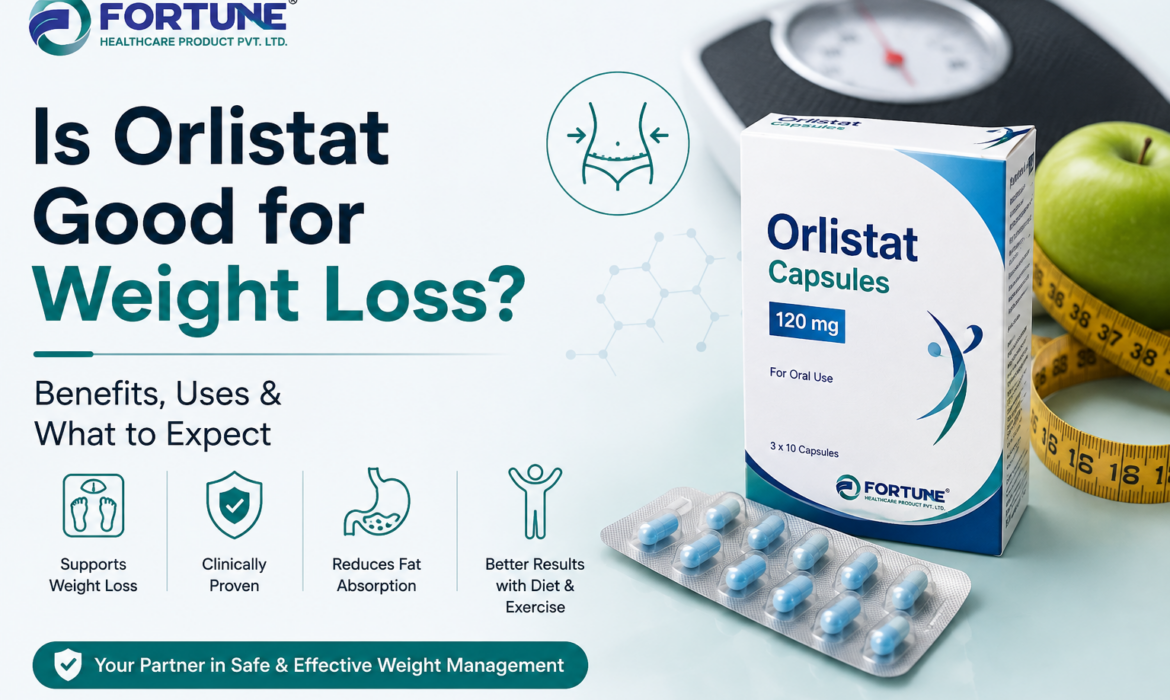
Orlistat is a prescription medicine that helps people who are overweight or living with obesity. It supports both weight loss and long-term management. It works by blocking some of the enzymes that digest dietary fat, so the body absorbs less of it. You’re meant to use orlistat for weight loss alongside a reduced-fat diet and regular physical activity, not instead of them. While it can help with weight reduction, the results are generally modest. Benefits, side effects, and suitability all vary from person to person.
How Does Orlistat Work?
This medication belongs to a drug class called lipase inhibitors. Lipases are the enzymes your digestive system uses to break fat down so it can be absorbed. The tablet blocks a portion of those enzymes. As a result, some of the fat you eat passes through the digestive tract largely undigested.
That’s the entire mechanism. Nothing about it changes your appetite, metabolism, or how your body burns fat already stored. It simply means fewer fat calories reach your system.
Doctors generally prescribe it for people who are overweight or living with obesity, often after diet and exercise alone haven’t moved the needle. Exact eligibility depends on the clinical guideline and the individual case; there’s no single universal cutoff.
How Much Weight Can You Expect to Lose?
This is where people are often surprised. The effect is modest. MedlinePlus puts typical results around 6 pounds, or roughly 6% of body weight. That’s with consistent use alongside genuine diet changes — not on its own.
A few things move that number: starting weight, activity levels, and dosing consistency around meals. Whether you’re genuinely eating less fat, plus other medications or conditions, also plays a role.
None of that makes the approach pointless; it’s a supporting tool, not a standalone fix. People expecting a dramatic before-and-after tend to be let down. Those who treat it as one piece of a longer plan tend to get more out of it.
How This Weight-Loss Medicine Can Support Weight Management?
It trims calories from fat. Less fat absorbed means fewer calories absorbed, adding up to a modest deficit over weeks and months.
It can support long-term maintenance. Losing weight and keeping it off are different challenges, and this drug can help with the second when it’s well tolerated.
It nudges eating habits. Eating a fatty meal on it tends to cause noticeable digestive discomfort, so many people naturally start eating less fat just to avoid it. That behavioral shift is arguably one of its more underrated benefits.
It works best as part of a system. Diet, activity, and medication together outperform any single piece alone, and using orlistat for weight loss without addressing eating habits works against the mechanism rather than with it.
The Right Way to Take It With Meals
Most prescribers recommend taking a dose with meals that contain fat, usually during or shortly after eating. Skip a meal, or eat one with essentially no fat, and you likely don’t need that dose. Your prescriber’s instructions matter more than any general rule, and taking more than prescribed doesn’t speed up results; it just raises the odds of side effects.
One product available in this category is Orlicure 120, a 120 mg capsule from Fortune Healthcare Pvt Ltd built around the same fat-blocking mechanism, with a 24-month shelf life. As with any prescription product, which one is right for you, if any, is a conversation for your doctor, not a product listing.
The Side Effects You Should Know About
The common ones are mostly digestive: oily spotting, oily or fatty stools, gas with an oily discharge, looser and more urgent bowel movements, abdominal discomfort, and occasionally difficulty controlling bowel movements. Higher-fat meals make all of these more noticeable, so sticking closer to a low-fat diet generally makes the experience easier to manage.
Serious Risks to Watch For
A more serious risk is worth flagging too. In June 2026, the FDA updated safety labeling across approved products in this category, including the prescription 120 mg strength, to note rare reports of acute kidney injury and kidney stones. Anyone with a history of kidney problems should raise it with their doctor before starting. Severe abdominal pain, signs of an allergic reaction, yellowing skin or eyes, dark urine, or anything resembling a kidney issue warrants prompt medical attention.
Who Should Take It?
Doctors typically weigh more than a number on a scale. BMI is part of the picture, but so is health history, prior weight-loss attempts, existing conditions, and current medications.
Obesity-management guidance in India has historically used lower BMI thresholds than some Western guidelines. Doctors often consider treatment above a BMI of 27, or above 25 if complications like high blood pressure or diabetes are already present. Even so, blood pressure, blood sugar, cholesterol, and liver and kidney function all factor into whether this is the right call.
It isn’t suitable for everyone. Anyone with digestive or absorption disorders, kidney problems, or medications that might interact should raise that with their doctor first. It affects how well the body absorbs certain drugs and nutrients, not just fat. It also isn’t used for weight management during pregnancy.
What to Expect From Weight-Loss Medication
Slow, moderate progress is the honest answer, not a transformation and not overnight results. Some people do well with it; others stop because the digestive side effects outweigh the benefits. Even clinical guidelines don’t fully agree. The American Gastroenterological Association has recommended against routine use, citing modest weight-loss benefit relative to GI side effects. Other, more recent guidelines still list it as reasonable for the right patient. That disagreement says something useful in itself: this is a legitimate option, just not automatically the best one for everyone.
Conclusion
So, what are orlistat tablets used for, in plain terms? It supports weight loss and weight maintenance in people who are overweight or living with obesity. It’s meant to be used alongside a lower-fat diet, regular exercise, and a doctor’s supervision — not on its own. What sets it apart from many other weight-loss medications is that it never touches appetite; it works purely on fat absorption in the gut. The results are modest, and the side effects rule it out for plenty of people.
If you’re considering it, look at the whole picture: diet, activity level, realistic expectations, and a doctor actively monitoring your progress rather than treating the capsule as the entire plan.
Is it good for weight loss?
It can help, but the results are generally modest rather than dramatic. Most people see meaningful benefit only when it’s paired with a genuine reduction in dietary fat and consistent use over time — on its own, without those changes, the effect is much weaker.
How does it reduce weight?
It works by blocking a portion of the enzymes your digestive system uses to break down dietary fat. When those enzymes are blocked, some of the fat you eat passes through the body without being fully digested or absorbed, which means fewer fat calories make it into your system. Over weeks and months, that reduction adds up to a modest calorie deficit.
Does it burn fat already stored in the body?
You technically could, but doing so works against the way the medication is designed to function. It only reduces the calories from fat you eat — it doesn’t touch appetite, metabolism, or stored fat. Without a genuine effort to lower dietary fat intake, you’re unlikely to see much benefit, and you may just end up with the digestive side effects without the payoff.
Can I skip diet changes and just take it?
No. It has no effect on fat that’s already stored — it only interferes with the digestion of fat from the food you’re currently eating. If the goal is to reduce stored fat, that still comes down to overall diet and activity, not this medication.
What happens after a high-fat meal?
Since the undigested fat has to pass through the digestive tract, higher-fat meals tend to make side effects more noticeable — oily spotting, oily or fatty stools, gas with an oily discharge, and more urgent or looser bowel movements. This is one of the more common reasons people naturally start cutting back on dietary fat while taking it, since sticking to lower-fat meals makes the experience much easier to manage.